You just need to know something needs to change.A six-week cohort inside The Fulfilment Studio for experienced professional women who are tired of proving, carrying too much and feeling flat. It isn't running at the moment — join the waitlist and you'll hear first if and when it opens again.
It might be a conversation you've been putting off for months, boundaries you keep softening, or finally giving yourself permission to go after something you've felt guilty for even wanting.
You get honest with where your energy is going, what you're carrying, and what you've been quietly tolerating. Then, with the group behind you, you take one solid step towards changing it, without needing to blow anything up.
Since 2020 I've coached and trained over three thousand driven professionals, in businesses like Reckitt, Unilever and Mars. Legal, category, marketing, HR, ops, finance, transformation — the job title matters less than the pattern.
You're good at your job and inside you know that. But somehow the praise never sticks. You come out of a big meeting and ask your manager how you did. They say you were great. You hear it, and you don't entirely believe them. It's never quite good enough.
“I doubt myself, and I start going in a spiral of like, God, why did I do that? I shouldn't have said that. I could have done that bit better.”
Your work, the team, the culture, the inevitable fires that need putting out and the ones you caught before anyone else noticed. And it spills everywhere — into family life, into friendships.
A client told me she'd signed up as class rep at her daughter's school: “Absolutely no value in that for me whatsoever. But nobody else was stepping forward. So I was like, right, I'll do that then.” Same in your friendship group. You organise the things, fed up of waiting for anyone else to step up. Then the resentment settles in and you feel guilty for that too.
“And always, the bit that gets deprioritised is you.”
You're probably not burnt out. Though don't get me wrong — as busy as you are, that's a minor miracle. It's subtler than that. Some of you are exhausted, some of you are bored, and somehow busy-but-bored is worse. That fire that drove you early career has dimmed.
“I'm tired of being tired. I just don't feel like me. Feel like I just don't have the energy for this anymore.”
One of the most powerful things I've experienced since leaving corporate was being in rooms with other founders. Small containers of business owners, all with their own challenges and missions, all somehow making each other better every week.
There's nothing quite like the momentum, the honest mirrors, the inspiration, the tools and the connections that get built when powerhouses come together.

In corporate, that barely exists. Who do you turn to when you're worried your team doesn't like you, or when imposter syndrome has you hostage?
You've probably had seeds of it. A leadership programme you were nominated for. A mentor. A good friend's ear after a particularly bad week. But even then, most of us keep the mask on. We open up about the challenge and still pretend we're fine and have the answers. We soften the reality, or we make it smaller than it is.
You shouldn't have to become a founder to get access to the kind of genuinely honest rooms I've been part of as an entrepreneur. So I built one, inside The Fulfilment Studio, for women who aren't going anywhere near a start-up.
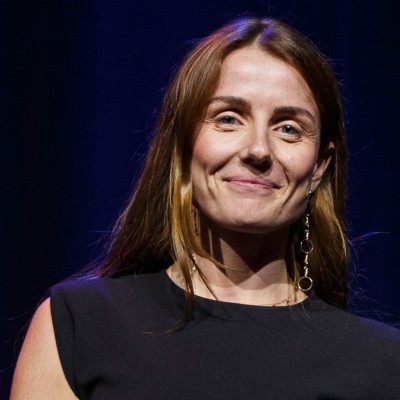
Chloe Cooper — founder, The Fulfilment Studio

Then one day you notice you've built a life around being useful, and that you've lost some of yourself along the way — including any real sense of what you want.
You realise almost everything you do in a day is aimed at somebody else. The business. The team you care about far more than is strictly required. Your friends and family. The stranger at the school gate you're inexplicably trying to impress. The waiter you're so polite to that your own order comes last. The colleague whose mood you manage before your own.
ownHER doesn't mean taking on more. You've had plenty of that. It means taking ownership back: of what you want, what you carry, and the first move you've been avoiding.
Two weeks each. Open any week for a flavour of what we'll cover.
It's a small cohort, so we'll adapt to what the group actually needs.

We start with the Advanced Fulfilment Snapshot. You'll score the nine key areas of your life, then layer on the two beliefs that keep most people stuck — so you see not just how each area is doing, but the exact patterns holding you in Prisoner, Escaper or Endurer mode.
Then you work out where to focus to shift into radical ownHERship. If you've done a Fulfilment Snapshot before, this takes it several levels further.
There are fifteen of these, including proving, people-pleasing, over-responsibility, harmony-keeping, permission-waiting and being needed. You're probably living inside a couple of them already.
We don't just spot them. I'll share a tool that helps you shift out of them — going a level down to the beliefs underneath and flipping them into something that unlocks change rather than blocking it.

Not the development-plan version, and not the one that keeps everyone else comfortable. This is the week you get radically honest with yourself and let yourself be entirely selfish about what you want.
I'll invite you to stop keeping yourself, and your goals, small — and to name the version of you who gets to create whatever it is that you uniquely want.
How your vision translates into a plan, and what you need to let go of to make room for it. Some of it you put down. Some gets shared. Some doesn't need dropping at all — it needs to be seen, resourced or paid for, because the work was never the problem. Nobody noticing you were doing it was the problem.
You also name your move out loud this week and write the words you're going to use. Most women aren't short of nerve. They're short of a sentence they can actually say.

We deliberately keep this week open, and design it around whatever is actually stopping the group from making their move.
You'll have completed all six check-ins, so you get your whole six weeks back as a written report. We read them together, work out what actually shifted, and you draw the line you don't cross back over.
This is also where you write your own permission slip. One client described taking an afternoon for herself as “I feel like I'm off skiving” — that voice turns up for everyone, and it doesn't leave on its own. You write it, you sign it, nobody countersigns it.
Running alongside all six weeks: the weekly check-in. Five minutes, with an outsized return — nine areas scored, and at the end the whole six weeks back as a written report.
At least two hours back a week. We'll never ask for more than ninety minutes of it.
Most women who come to this are already stretched. So the first thing you get isn't a video or a module — it's the Time Back Challenge. Fifteen minutes with the Time Back AI tool, a short workbook and your actual calendar.
It walks through your real week with you. What's eating the time. What was never yours to carry. Where you can reclaim, renegotiate, delegate, defer or protect at least two hours a week — pinned to a day and a time, not left as good intentions.
Talk to it, type at it, or send it a screenshot of your diary.
It's the first thing you get when a cohort starts, before any of the calls. Fifteen places means I'll be saying no to people I like, so nothing here depends on you getting one.

Built for the gaps in a full week, not for another evening of homework.
An hour, Wednesdays, online. The first and last run longer. Then an optional half hour straight after every call, same link — finish your check-in, ask the thing you didn't want to ask in front of everyone, or just stay in the room a bit longer.
If you want one, I'll pair you with another woman for the six weeks. Voice notes, texts, a coffee, whatever works. If it doesn't feel useful, tell me and we'll sort it.
Somewhere to say the things you usually can't, to women who don't work with you, won't sit in a meeting with your boss, and won't judge you for not having it all together.
Bite-sized audio, AI tools, cheat sheets and checklists. Plus your weekly five-minute check-in across nine areas, and the written report at the end that shows what actually moved.
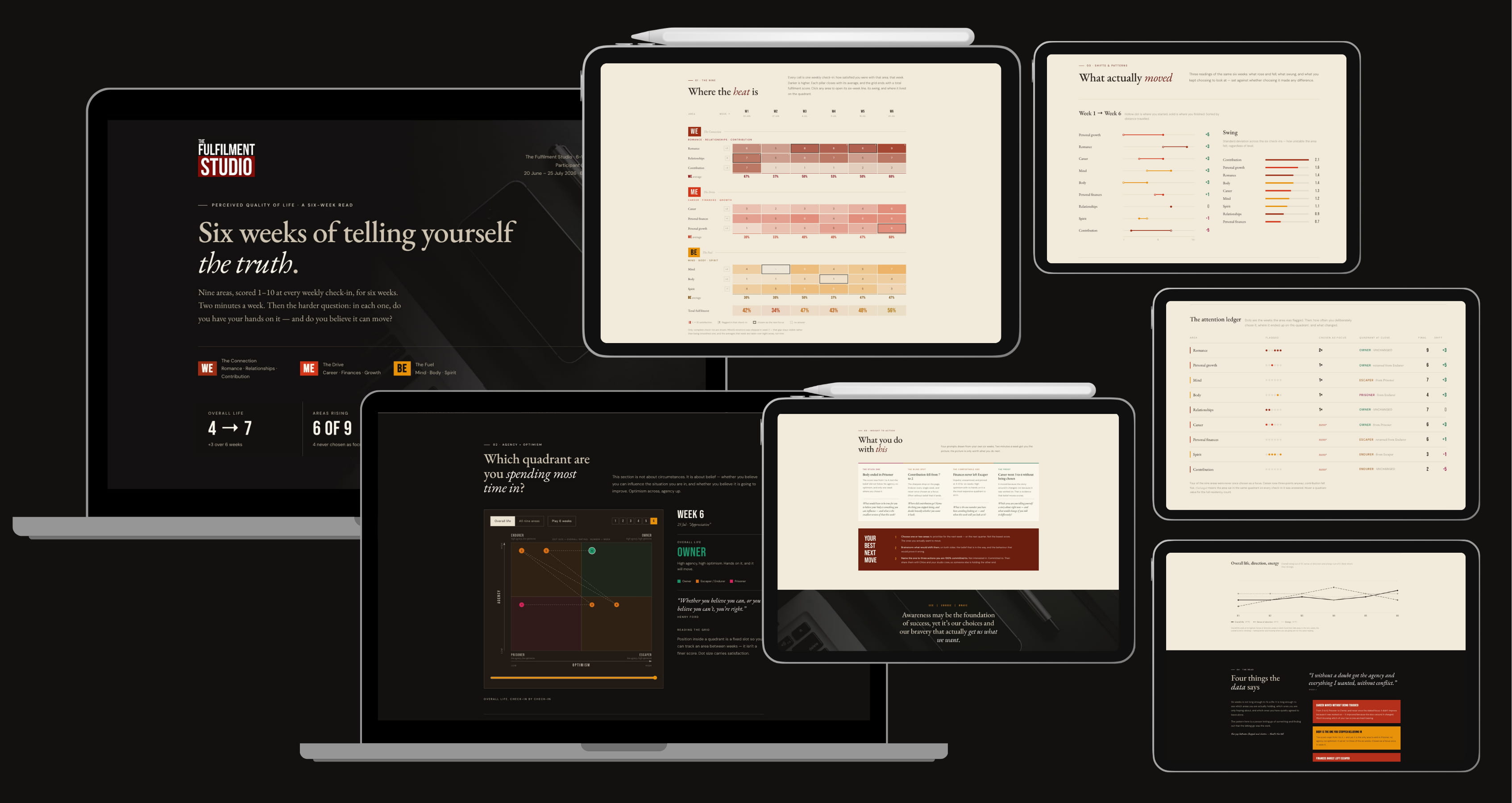
Five minutes a week. Nine areas, scored at every check-in — then the harder question: do you have your hands on it, and do you believe it can move?
At the end you get the whole six weeks back as a written report. Where the heat is, what actually shifted, and which quadrant you've been living in.
Your own six-week read. Illustrative data shown.
“I no longer stay awake all night reliving the whole day. I have more energy and more time, because I know what to focus on and what's important. All of this has resulted in me being promoted, and I've been asked to join the board.”
LouiseChief Customer OfficerEleven cohort places, four VIP. Pricing is confirmed with the waitlist when the next cohort is announced.
Let's be honest, life sometimes kicks you in the face. So here's my promise. If life genuinely takes you out, message me. We'll either adjust so you can stay with your cohort, or carry your seat to the next one. No guilt. You've spent fifteen years being the woman who never drops anything — I'm not going to hand you one more thing to feel guilty about.
If you come to the calls, do the work and get to week six without having started your move, we'll book a private Game Plan Call and get it done together.
LaurenceUnilever — moved from marketing into HRClick any question to open the answer.
You're not meant to. Working it out is what the first four weeks are for. I expect most women to arrive thinking they know what they need to do, and to find the real answer is somewhere else entirely once we've looked at the patterns, the guilt and the load.
It doesn't have to be dramatic. Nobody's suggesting you resign on a Tuesday. Or at all.
It might be asking for the meeting you've been avoiding. Saying no to something you'd normally absorb. Asking to be paid more. Asking for acknowledgement of work you've been doing invisibly. Telling your partner the truth about how tired you are of carrying it all. Booking the childcare. Protecting the class you signed up for and actually going to it.
The size isn't the point. What matters is that it's honest, and that it's different from the pattern you've been in. One woman protecting her Monday morning swim changes how she feels and how she shows up for the rest of the week. Swimming isn't magic. What changes is that she starts building proof — that she can choose herself, let some things go, and nothing falls over.
I expect nearly every woman who applies will be thinking that, and looking at your current diary you're probably right.
It's sixty to ninety minutes a week. An hour on the call, five minutes on your check-in, and a bit of thinking time. And it's exactly why the Time Back Challenge comes first — it walks through your real week with you and helps you find at least two hours. Sixty to ninety minutes to spend with us. The rest is yours.
Because this cohort is focused on a specific pattern I see again and again in experienced women: proving, over-carrying, guilt, self-silencing, and being rewarded for holding too much together.
In a women-only room, we don't have to spend the first hour explaining that. We can get straight to the work.
The wider Fulfilment Habit work also runs with mixed teams and organisations. This cohort is one focused expression of it.
Yes. ownHER is a cohort inside the wider Fulfilment Habit work. You'll use the same core ideas: the nine-area check-in, the agency and optimism lens, and the ownership moves. This cohort is specifically shaped around how those patterns show up for experienced professional women.
Five minutes, once a week, ideally Sunday evening or Monday morning so it sets up your week. You score nine areas of your life and note where your agency and optimism are. It's the one thing I'll ask you to do without fail, because it's what turns six nice conversations into something you can actually see moving.
No. All six calls are live on Zoom, Wednesday lunchtimes. Wherever you are is fine.
Yes and no. Not in the traditional sense — there's no competency model and no 360. But leadership is influence, and this will change how you lead, because it changes what you carry, what you say and what you choose.
Brené Brown defines a leader as anyone who takes responsibility for finding potential in people and processes, and who has the courage to develop that potential. That's exactly what ownHER is for. Except the potential we're going after is yours.
Tell me and we'll sort it. It's optional anyway — some women live in it, others just come to the calls, and it makes no difference to what you get.
Yes, and often they do. Message me and I'll send you a short note you can forward for sign-off.
If company sign-off will slow you down or turn this into another thing waiting on someone else's approval, you can also pay personally. Either route is fine. The important bit is that you choose, rather than waiting for permission.
No individual answers will be shared without your permission. I may use anonymised patterns and themes to improve the work, but your specific story stays yours unless you explicitly say otherwise.
Everything you need to weigh it up, in one place. Dates land in your inbox when they're set.

Fifteen places, whenever it next runs. The waitlist goes first.
There's no date on the next cohort yet — I'm reworking how it fits alongside the rest of the Studio work. The waitlist is the only place the next dates go first.
One field, no application yet. Nothing else lands in your inbox in the meantime.
If and when the next cohort opens, the waitlist gets the dates and the short application before anyone else.
Five-minute application, honest answer either way. If it isn't a fit I'll tell you straight, and tell you why.
In the meantime, the private 1:1 Fulfilment By Design Intensive is open.
Got a question first? Email chloe@thefulfilmenthabit.com or send me a message on LinkedIn.