The Wellbeing Leader: Prioritising Health, Happiness, and Balance
Do you believe in putting your own well-being and the well-being of others first? Do you know how to balance hard work with relaxation and fun, spreading positivity wherever you go? If so, you might be a wellbeing leader.
Wellbeing leaders are role models for a balanced life. They emphasise the importance of mental, physical, and emotional health, creating an atmosphere where people feel inspired and recharged.
In this blog, we’ll explore what defines a wellbeing leader, their strengths and weaknesses, real-world examples, and how to embrace this leadership style to make a lasting impact.
Watch this if you prefer videos over articles.
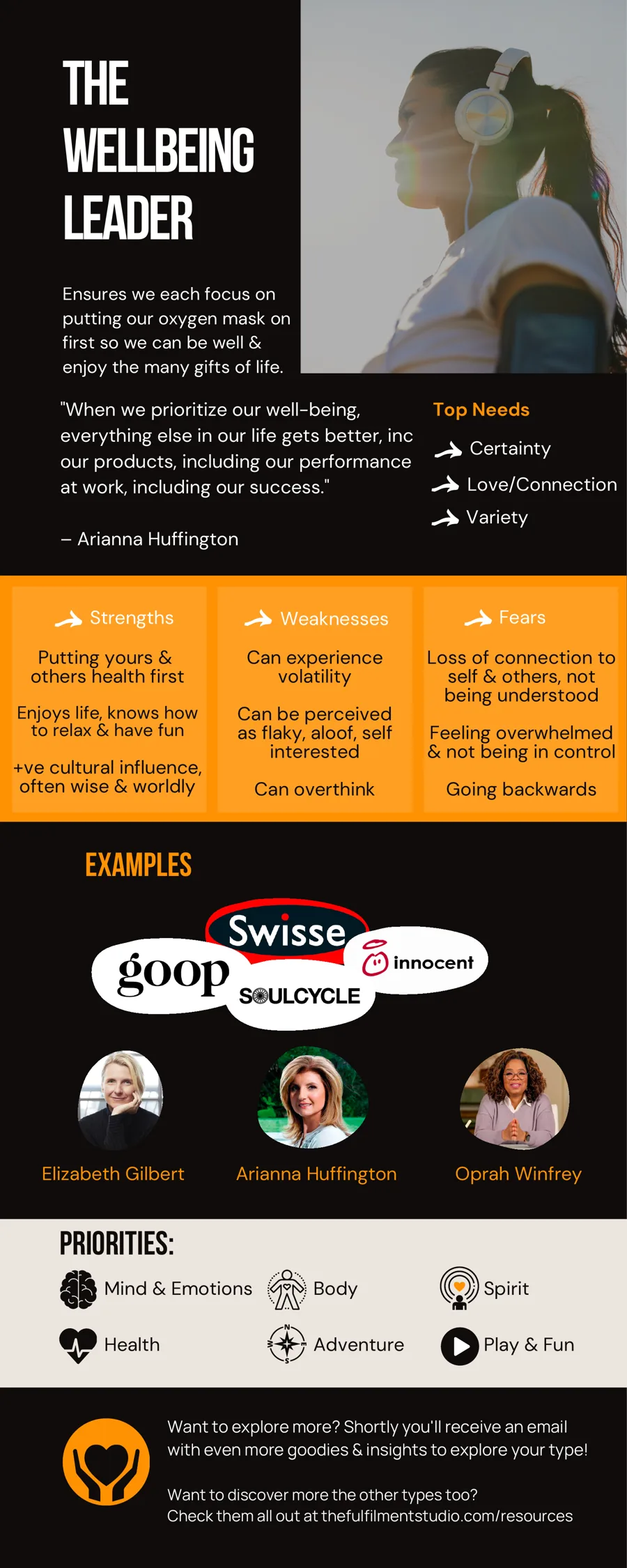
What Is a Wellbeing Leader?
A wellbeing leader is someone who ensures that both they and those around them prioritise self-care and wellness. Their approach to leadership is rooted in the belief that when people are physically, mentally, and emotionally healthy, they perform at their best.
Key Characteristics of Wellbeing Leaders:
- Prioritise Well-Being: They encourage others to “put their oxygen mask on first” before taking care of others.
- Know How to Have Fun: Wellbeing leaders enjoy life and inspire others to do the same.
- Positive Influence: Their presence uplifts and energises those around them.
- Focus on Balance: They promote a lifestyle that harmonises work, play, and self-care.
Arianna Huffington, a wellbeing advocate, perfectly sums this up:
"When we prioritise our well-being, everything else in our life gets better—including our performance at work and our success."
Strengths of Wellbeing Leaders
Wellbeing leaders have unique qualities that make them influential and inspiring:
- Health-Focused
They prioritise their physical and mental health, setting an example for others to follow. - Cultural Influence
Often worldly and wise, wellbeing leaders inspire others to embrace diverse perspectives and experiences. - Balanced Lifestyle
They know how to balance productivity with rest, avoiding burnout and promoting sustainability. - Fun and Relaxation
Wellbeing leaders remind us of the importance of enjoying life’s simple pleasures. - Empathy and Care
They offer emotional support and create environments where people feel valued and understood.
Not sure which type you are? Take the three-minute leadership quiz.
Take the quizWeaknesses and Challenges for Wellbeing Leaders
Despite their positive influence, wellbeing leaders face their own set of challenges:
- Volatility
Their emotional nature can make them prone to highs and lows, affecting their consistency. - Overthinking
They may overanalyse decisions, leading to delays or unnecessary stress. - Perceived Aloofness
Some may see wellbeing leaders as too focused on self-care, interpreting it as aloofness or self-interest. - Balancing Responsibility
In their efforts to promote well-being, they may neglect practical aspects of leadership like accountability or results-driven focus.
Famous Wellbeing Leaders
Let’s look at some inspiring individuals and brands that embody the wellbeing leadership style:
Arianna Huffington
The founder of Thrive Global, Huffington has become a leading voice in the wellness movement, promoting sleep, mindfulness, and self-care as keys to success.
Oprah Winfrey
As a global icon, Oprah emphasises the importance of mental health, gratitude, and spiritual well-being through her work and platform.
Elizabeth Gilbert
The author of Eat, Pray, Love is an advocate for living life with joy, creativity, and self-discovery.
Wellbeing Brands:
- SoulCycle – Encouraging physical and emotional transformation through fitness.
- Innocent Drinks – A brand that champions health and sustainability with a light-hearted, fun approach.
- Swisse – A global leader in wellness products that emphasise holistic health.
Priorities of Wellbeing Leaders
Wellbeing leaders are guided by a set of core priorities that align with their leadership philosophy:
- Mind and Emotions
They focus on mental health and emotional well-being as foundational to a successful life. - Body
Physical health is equally important, and wellbeing leaders advocate for exercise, nutrition, and rest. - Health
Their leadership encourages a comprehensive approach to health, encompassing mind, body, and spirit. - Adventure
They value exploration and novelty, whether through travel, hobbies, or learning new skills. - Play and Fun
They believe that joy and relaxation are essential to productivity and happiness.
How to Excel as a Wellbeing Leader
If you identify with the traits of a wellbeing leader or want to adopt this style, here are some strategies to thrive:
1. Emphasise Self-Care
Make time for yourself to recharge and model this behaviour for your team. People are more likely to take care of themselves if they see you doing it.
2. Create a Positive Culture
Foster an environment where people feel safe, valued, and encouraged to bring their whole selves to work.
3. Promote Balance
Encourage your team to prioritise their well-being, whether through flexible schedules, mindfulness practices, or open conversations about mental health.
4. Stay Grounded
While prioritising well-being, remember to balance emotional decisions with practicality and focus.
5. Celebrate Life’s Joys
Take time to celebrate achievements—both big and small—and encourage others to find joy in everyday moments.
Not sure which type you are? Take the three-minute leadership quiz.
Take the quizOvercoming Common Fears
Even wellbeing leaders face challenges. Here’s how to address some of their most common fears:
- Fear of Losing Connection
Focus on open communication and authenticity to maintain strong relationships with others. - Fear of Overwhelm
Simplify your responsibilities and delegate tasks to avoid feeling overburdened. - Fear of Regression
Keep a journal or accountability system to track your progress and remind yourself of how far you’ve come.
Why Wellbeing Leadership Matters
In today’s fast-paced world, the wellbeing leader brings much-needed balance and perspective. They remind us that success isn’t just about achievement—it’s also about health, joy, and meaningful connections.
Wellbeing leaders create a ripple effect, inspiring others to prioritise their well-being, which ultimately leads to stronger, healthier, and more productive teams and communities.
Final Thoughts
Becoming a wellbeing leader is about more than just taking care of yourself—it’s about creating a culture where well-being is valued and celebrated. By embracing your strengths, addressing your challenges, and leading with positivity, you can make a lasting impact as a wellbeing leader.
Not sure which type you are? Take the three-minute leadership quiz.
Take the quiz